Understanding Peptide Pureness Testing
Just How To Read A Peptide Pureness Test: Hplc, Mass Spectrometry And Coa Analysis For Uk Scientists 2026
Likewise, keep in mind that "research-grade" peptides are indicated for the laboratory bench and feature high purity and identity checks yet are not generated as medicines. Constantly check that your peptide features correct analytical information (HPLC chromatogram and MS outcomes) and is labeled for research usage. Armed with this understanding, you can with confidence interpret tags like "95% pureness, research study grade" and make use of those peptides to drive your experiments without complication. Knowledge of purity levels will also direct you if you ever before need a higher purity peptide for a particularly sensitive assay. In the end, getting the pureness level right indicates much more reputable science-- which's the supreme goal for any type of researcher. With years of logical screening experience and progressed tool systems, BOC Sciences gives extensive peptide top quality screening solutions throughout the entire procedure from resources to solutions.
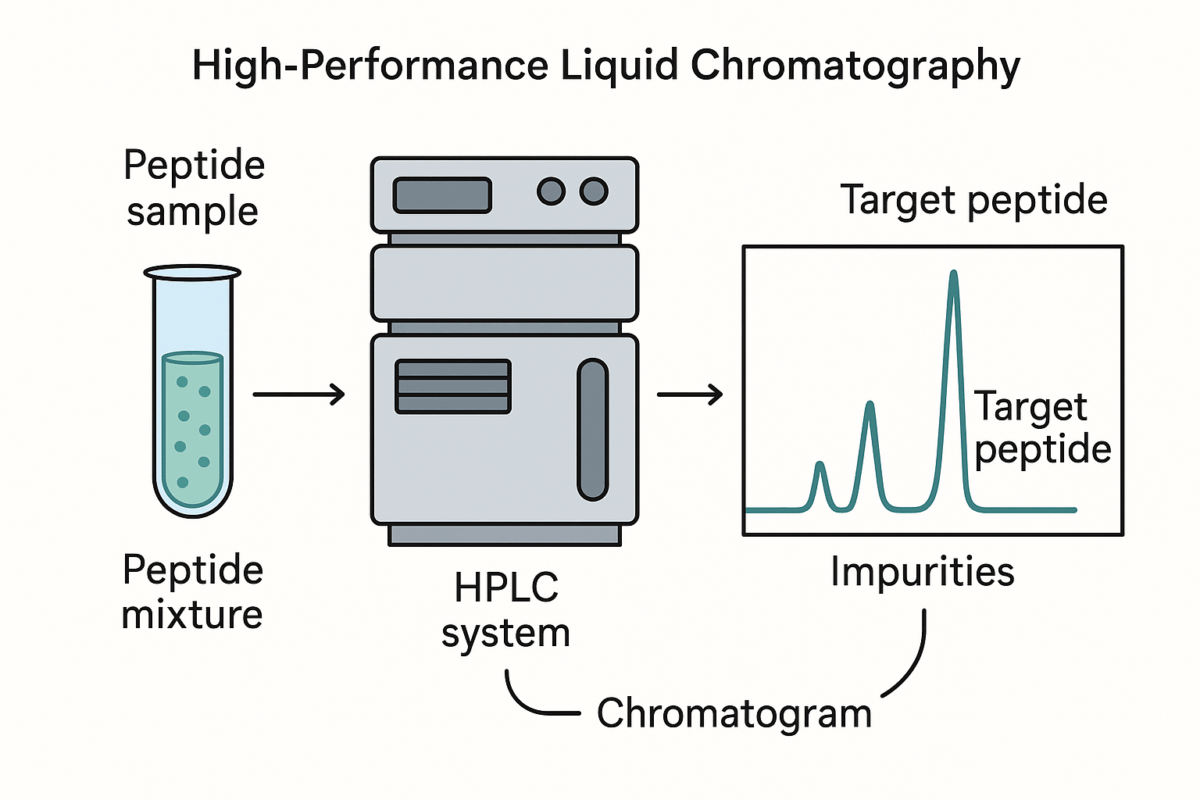
The software application draws limits around each top and determines the area underneath. The pureness portion originates from contrasting the area of the primary optimal to the total area of all detected optimals. Most reports include a table listing each peak's retention time, area, and percent of total location.Truncation And Fragmentation Products
The quality and reliability of a peptide purity dimension rely on approach specifications and documentation top quality. The mobile phase, usually a mixture of water, acetonitrile, and an acid modifier, is saved in reservoirs and delivered via the system by a high-pressure pump. The pump preserves precise flow rates, typically in the range of 0.5 to 2.0 mL/min depending upon the technique and column layout. High stress forces the mobile phase with securely loaded fragments inside the column, creating sharper splittings up and higher resolution than traditional low-pressure chromatography.- BOC Sciences is geared up with instruments like DLS, TEM, SEM, and so on, to totally examine nanoparticle size, distribution, and microstructure.
- The mobile stage, frequently a combination of water, acetonitrile, and an acid modifier, is stored in storage tanks and delivered via the system by a high-pressure pump.
- We provide physical property screening that helps teams function more effectively with challenging examples.
- The mobile phase is a slope of water and an organic solvent like acetonitrile, usually with a percentage of trifluoroacetic acid (TFA) to sharpen the peaks.
The injector presents a specific quantity of example right into the mobile-phase stream. Regular shot quantity issues because straining the column can widen tops, distort purity price quotes, or conceal close-by pollutants. A solid peptide testing workflow uses methods that respond to corresponding questions. The table listed below is the useful means to think about usual examinations when reading a peptide COA.
Encapsulation Performance And Medication Loading Evaluation
Theoretically, peptide pureness is measured by the chromatogram Sports Science produced by reversed phase HPLC, and furthermore, we can obtain the number and relative quantity of feasible spin-offs by determining the peak location. A high-grade chromatogram has a single, balanced primary peak with a level baseline on either side. " Trailing"-- where the optimal trails off gradually on one side-- can indicate column issues, sample overloading, or additional interactions between the peptide and the stationary stage. In this setup, the fixed stage is hydrophobic (water-repelling), typically C18-bonded silica. The mobile phase is a slope of water and an organic solvent like acetonitrile, frequently with a percentage of trifluoroacetic acid (TFA) to develop the optimals.
As the percent of organic solvent progressively boosts throughout the run, molecules are launched from the column in order of their hydrophobicity-- the much more hydrophobic a peptide, the longer it requires to elute (wash off). Given that impurities generally differ from the target peptide by at the very least one amino acid, they have slightly different hydrophobicities and turn up as separate heights on the chromatogram. The bottom line is not to puzzle pureness (HPLC percentage of the primary peptide vs pollutants) with overall web content. For check here speculative planning (like computing molar concentrations), both purity and web content work numbers, however pureness is what shows the chemical homogeneity of the peptide sample.
It's possible to have a peptide that is, say, 95% pure by HPLC and yet the internet peptide material is something like 70% of the powder's weight (the rest being water and salts). Don't be alarmed-- this is normal and is normally identified by separate evaluations (like amino acid analysis). Peptide pureness is most frequently identified by high-performance liquid chromatography (HPLC) with a discovery wavelength of 220 nm, which is optimal for identifying peptide bonds. This method separates peptides from pollutants and evaluates both target peptides and pollutants, ensuring top quality samples for study.